

This post may contain affiliate links at no additional cost to you. As an Amazon Associate I earn from qualifying purchases. Click to view our full disclosure.
What's inside
Want a lean, athletic body with broad shoulders and visible abs, without the bulk of a bodybuilder? That’s the ottermode physique.
It looks great, it moves well, and it’s realistic for most guys who train consistently. It won’t happen overnight, but the plan itself is simple.
In this article, we’re covering what ottermode is, how lean you actually need to be, and exactly how to train and eat to get there, with a sample week you can start on Monday.
What is ottermode?

Ottermode is the internet’s name for a swimmer’s physique. Think lean, visible muscle and a V shape: broad shoulders and a wide back that taper down to a narrow waist.
It sits between two other popular looks:
- Bear mode is bigger and softer, with more muscle and more body fat. You can read more in our guide to bear mode.
- Bodybuilder is about building as much muscle as possible.
An ottermode body carries less muscle than either, but with lower body fat it’s easy to see. The arms and legs look toned rather than bulky, and you look capable doing just about anything, from lifting to hiking to swimming.
One thing to know up front: you can’t skip leg day. Ottermode is a whole body look, so you’ll train everything, with a little extra attention on your back and shoulders.
Ottermode vs athletic vs bear mode
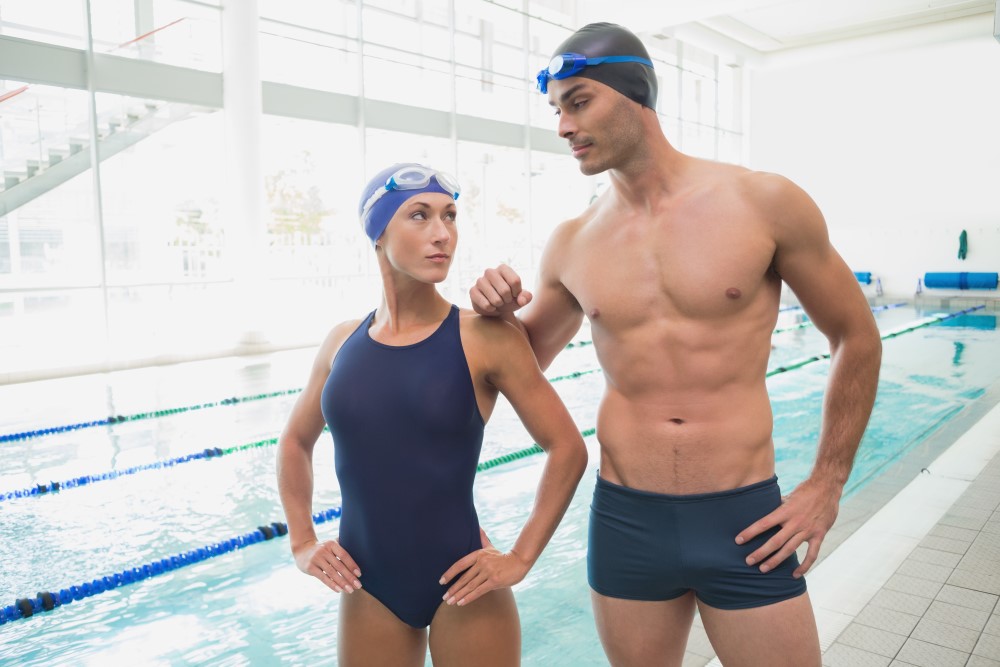
The names get used loosely, and the lines between them are blurry. Here’s how we think about them.
| Ottermode | Athletic | Bear mode | |
|---|---|---|---|
| Look | Lean, V-shaped, visible abs | Muscular and lean, often bigger legs and chest | Big and strong, softer midsection |
| Body fat | Low | Low to moderate | Moderate to higher |
| Training focus | Lifting plus plenty of cardio | Strength, power and sport | Heavy lifting, less cardio |
| Eating | Around maintenance, or a small surplus | Fueled for performance | Eating for size |
Honestly, ottermode and athletic overlap a lot. Swimmers are athletes, after all. If anything, ottermode puts a little more weight on looking lean and a little less on carrying size.
Why it’s worth working toward
Ottermode isn’t just about looks. Carrying more muscle and less fat is good for your long term health.
More muscle, healthier heart
In a Greek study that followed adults aged 45 and over for 10 years, those in the top third for muscle mass had an 81% lower risk of cardiovascular disease, like heart attacks and strokes, than those in the bottom third.
That study was in older adults, but the muscle you build in your twenties and thirties is the muscle you carry into those years.
Better blood sugar control
In a national US survey of more than 13,000 adults, each 10% increase in muscle relative to body weight was linked to 11% less insulin resistance and a 12% lower rate of prediabetes or diabetes.
Insulin resistance means your body struggles to move sugar out of your blood and into your cells.
A body that works anywhere
A lean, strong body is useful as well as nice to look at. Stairs, sports, hikes and carrying heavy bags all feel easier. It’s also a look you can keep up around work, family and a social life.
How to get an ottermode body
Here are the four rules. None of them are complicated, but all four matter.
Rule 1: Lift weights, and train each muscle at least twice a week
You need muscle to show when you lean out, and lifting weights is how you build it.
A review of training studies found that working each muscle twice a week built more muscle than once a week. Another found that more weekly sets led to more growth. A set is one round of an exercise, done for a number of repetitions (reps).
You also don’t have to lift super heavy. In studies where every set was taken to failure, meaning until you couldn’t do another rep, lighter and heavier weights built similar muscle. Heavier weights did build more strength.
Here’s how to put that into practice:
- Train your whole body three days a week, like Monday, Wednesday and Friday.
- Build each workout around compound exercises. These are moves that work several muscles at once, like squats, rows and presses.
- Pick a weight you can lift 8 to 12 times with good form, and stop each set 1 or 2 reps before you’d have to stop.
- Add weight or reps over time. When you can do 12 good reps on every set, go up a little in weight.
- Give your back and shoulders extra work. Pull-ups, rows, overhead presses and lateral raises build the wide top half of the V.
New to lifting? Our 3 day full body workout is a great place to start, and our guide to vertical pull exercises covers the moves that widen your back.
Rule 2: Do regular cardio, and swim if you can
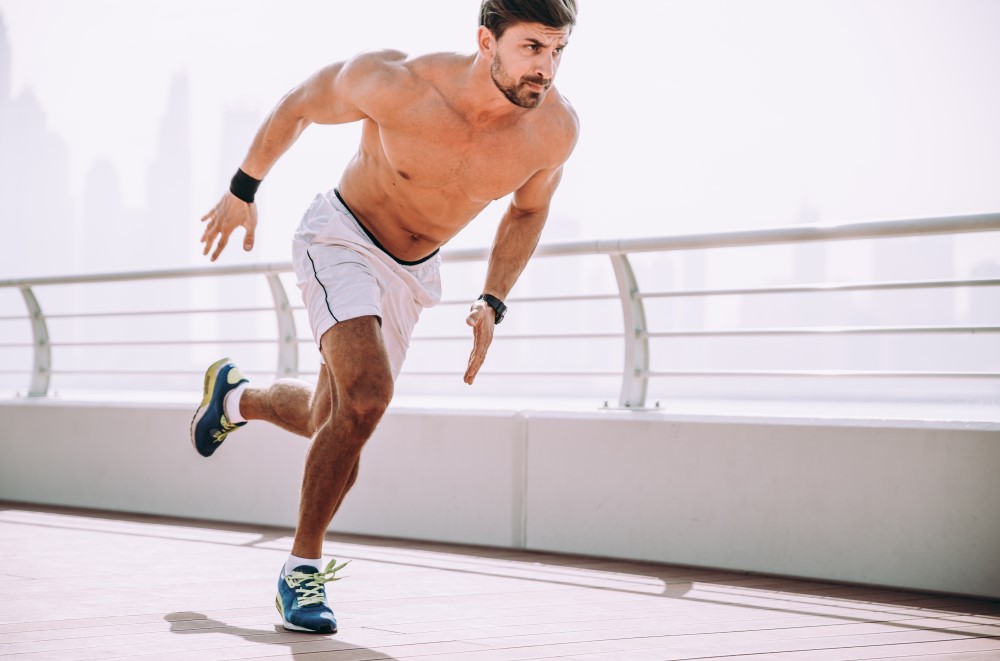
Lifting builds the muscle. Cardio helps keep you lean, and it keeps your heart and lungs fit.
The World Health Organization recommends that adults get 150 to 300 minutes of moderate cardio or 75 to 150 minutes of vigorous cardio each week. A simple check from the CDC is the talk test: during moderate cardio you can talk but not sing, and during vigorous cardio you can’t say more than a few words without pausing for a breath.
Short on time? High intensity interval training (HIIT) is a good option. It means short bursts of hard work with easier recovery in between, and it’s recognized as an efficient way to train with shorter sessions.
And if you have a pool nearby, swim. You want a swimmer’s body, after all. In a study of competitive swimmers, the lats and chest were the muscles that propelled the body in freestyle, while the shoulders positioned the arm for each stroke. Your lats are the large muscles on each side of your back that make it look wide.
No pool? No problem. Rowing, cycling, jogging and brisk walking all count. Our list of low impact cardio has more ideas.
Rule 3: Eat mostly whole foods, with plenty of protein
You don’t need a fancy diet for ottermode. Build most of your meals from whole foods like meat, fish, eggs, dairy, beans, potatoes, rice, oats, fruit and vegetables, and keep highly processed foods to a minimum.
The most important piece is protein. The International Society of Sports Nutrition recommends 1.4 to 2.0 grams per kilogram of body weight a day for people who exercise. That’s about 0.6 to 0.9 grams per pound. For a 170 pound guy, it works out to about 110 to 155 grams of protein a day.
How much you eat overall depends on where you’re starting from:
- If you’re skinny, do a lean bulk. That means eating a little more than your body burns so you can build muscle without gaining much fat. A review for natural bodybuilders recommends a surplus of about 10% to 20% and gaining about 0.25% to 0.5% of your body weight a week. For a 170 pound guy, that’s about 0.4 to 0.85 pounds a week.
- If you have fat to lose, do a cut. That means eating a little less than your body burns while you keep lifting. A review on natural bodybuilding contest prep recommends losing about 0.5% to 1% of your body weight a week to hold on to muscle. For a 170 pound guy, that’s about 0.85 to 1.7 pounds a week.
- If you’re in between, eat around maintenance, lift hard and let your body slowly recompose.
Not sure where to start with calories? Our macro calculator will give you a starting point.
Prefer to have the numbers worked out for you? The Superhero X12 program includes a detailed nutrition guide, a calorie and macro calculator, and bonus meal plans for bulking and cutting. There’s more on it below.
Rule 4: Be patient
We know this isn’t the fun rule, but it’s the one that makes the others work.
That’s why the rates above are small. Gaining slowly keeps fat gain down, and losing slowly helps you hold on to muscle. Skip the crash diets and extreme plans, because a plan only works if you can stick with it.
It also helps to know that you can’t burn fat from one spot. In a small study of inactive adults, six weeks of ab exercises five days a week didn’t reduce belly fat. Your abs show up when your overall body fat is low enough.
So stick with the plan, sleep well, and give it months rather than weeks. Everyone builds muscle and loses fat at their own pace, and that’s okay.
Ottermode body fat: how lean do you need to be?
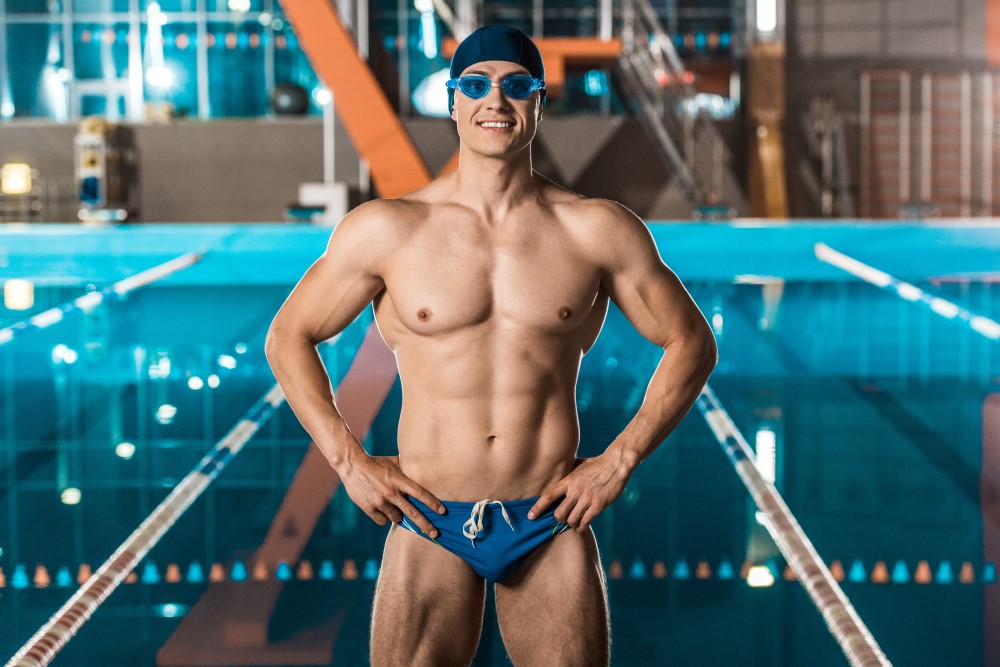
There isn’t an official ottermode number, and you don’t need one.
For a healthy reference point, a study that matched body fat to healthy weight ranges put healthy body fat for men aged 20 to 39 at roughly 8% to 19%. In that study, below about 8% lined up with being underweight.
Ottermode usually means sitting toward the leaner end of that healthy range. We wouldn’t chase single digits, though. It’s hard to keep up, and it isn’t needed for the look.
Instead of chasing a number, track your progress like this:
- Take photos in the same light every two to four weeks.
- Measure your waist at your belly button. If it’s shrinking while your lifts go up, you’re on track.
- Treat smart scale body fat readings as a rough guide, and look at the trend, not one reading.
A sample ottermode week
Here’s a simple week that puts all four rules together. It has three lifting days and four cardio days, and it adds up to 150 minutes of moderate cardio.
| Day | Session | Time |
|---|---|---|
| Monday | Workout A | 25 to 40 minutes |
| Tuesday | Swim at a steady pace | 45 minutes |
| Wednesday | Workout B | 25 to 40 minutes |
| Thursday | Jog, cycle or row at a steady pace | 30 minutes |
| Friday | Workout A | 25 to 40 minutes |
| Saturday | Swim at a steady pace | 45 minutes |
| Sunday | Brisk walk | 30 minutes |
Next week, start with Workout B on Monday, so you alternate between the two.
Workout A
- Goblet squat
- Dumbbell bench press
- Lat pulldown or pull-ups
- Romanian deadlift
- Lateral raise
Workout B
- Split squat
- Push-ups
- Seated cable row or dumbbell row
- Hip thrust
- Overhead press
Start each workout with 5 minutes of easy cardio and a few light warm up sets. Rest about 90 seconds between sets.
- Weeks 1 and 2: 2 sets of 8 to 12 reps of each exercise. That’s about 25 minutes.
- Week 3 onward: 3 sets of 8 to 12 reps. That’s about 35 to 40 minutes.
Every workout has a squat, a hinge (a hip bending move like a Romanian deadlift or hip thrust), a push and a pull. That means your major muscle groups get worked three times a week.
Once 3 sets feels easy to recover from, add a fourth set to your back and shoulder exercises first.
Want to swap in HIIT? Replace Thursday with 20 minutes: a 5 minute warm up, then 10 rounds of 30 seconds hard and 60 seconds easy.
Want a complete program? Try Superhero X12

If you’d rather follow a complete plan than piece one together, Superhero X12 is a good fit for ottermode. It’s a 12 week diet and training program from Keith Lai of FitMole, made for regular guys rather than movie stars.
Here’s what’s inside:
- Workouts for beginners and intermediates, three to four days a week
- Video demos of more than 75 exercises
- A nutrition guide of more than 80 pages, plus a calculator that works out your calories and macros
- Bonus meal plans for bulking and cutting
- Realistic goals whether you’re a beginner, an intermediate or skinny fat (slim, but soft, with little muscle)
The one thing we’d add for ottermode is more cardio, because the program is light on it. Keep the swims and the walk from our sample week and you’re set.
Our Superhero X12 review walks through every part of the program, and it has a 20% discount code for EWS readers.
Questions people ask
How long does it take to get an ottermode body?
It depends on where you’re starting from. If you’re already fairly lean and have been lifting, you might see a real difference in a few months. If you’re starting from scratch or have more fat to lose, think in terms of a year or more. Consistency matters far more than speed.
Can I get ottermode without swimming?
Yes. Swimming is a great fit, but the look comes from lifting, staying lean and doing regular cardio of any kind.
Will lifting weights make me bulky?
Not on this plan. With three full body workouts, plenty of cardio and eating around maintenance or a small surplus, you’ll build muscle gradually. You’re in control, too: once you like how you look, stop adding food and keep training.
Do I need to bulk first or cut first?
If you’re thin and new to lifting, a lean bulk usually makes sense. If you have a fair amount of fat to lose, cut first while you lift. If you’re somewhere in the middle, eat around maintenance and train hard.
You’ve got this! Start with three lifting days and some cardio, hit your protein, and build from there.
This article is for general information and is not medical advice. Check with your doctor before starting a new diet or exercise plan, especially if you have a medical condition or take medication.
