


What's inside
Tired of salads that leave you starving by 3 PM? A lunch with real protein in it may be the fix.
Every lunch below has at least 30 grams of protein, and 23 of the 25 come in under 450 calories. We worked out the numbers for each one from USDA food data, so you’re not guessing.
Why 30 grams? If you’re trying to lose fat without losing muscle, a sensible protein target works out to about 87 to 116 grams a day for a 160 pound woman. Spread over three meals, that’s roughly 30 grams each. We walk through the research further down.
In this article, we’re covering 25 lunches sorted the way you actually eat them: at your desk with no microwave, made ahead for the week, ready in five minutes, and vegetarian. Then we look at how much protein you really need and whether it keeps you full.
How to use this list
Each lunch shows its protein and calories, the ingredients, two or three quick steps, and a tip or swap.
The numbers count only the listed ingredients, worked out from USDA FoodData Central. Extras like dressing, sauces and seasoning aren’t included, so add those if you’re tracking closely. Brands vary too, especially deli meat and tofu, so check your labels.
At your desk, no microwave needed

These eight lunches are packed cold and eaten cold. No office kitchen required.
A few food safety basics from the USDA keep packed lunches safe:
- Use two cold sources. An insulated lunch bag with at least two cold sources, like two frozen gel packs, or a gel pack and a frozen water bottle, keeps food cold until lunch.
- Mind the 2 hour rule. Perishable food, like meat, poultry and eggs, shouldn’t sit out at room temperature for more than 2 hours, or 1 hour when it’s above 90°F.
- Some foods need no ice pack at all. Unopened canned fish and meat, hard cheese, whole fruit and vegetables, peanut butter, bread and crackers are fine on their own.
1. Chicken Caesar wrap with Greek yogurt dressing
47 g protein, 378 calories
- 4 oz cooked chicken breast, sliced
- 1 whole-wheat tortilla
- 1/4 cup plain nonfat Greek yogurt
- 1 tbsp grated parmesan
- 1 cup shredded romaine
- A squeeze of lemon, 1/2 tsp Dijon mustard and a pinch of garlic powder
Stir the yogurt, parmesan, lemon, mustard and garlic powder into a quick Caesar dressing. Toss it with the chicken and romaine, then roll it all up in the tortilla.
Tip: Making it the night before? Pack the dressing in a small container and add it at lunch, so the wrap doesn’t go soggy.
2. Tuna and white bean salad
36 g protein, 345 calories
- 1 can (5 oz) light tuna in water, drained
- 3/4 cup canned white beans, rinsed
- 1/2 cup cherry tomatoes, halved
- 1/2 cup diced cucumber
- 1 tsp olive oil, plus lemon juice, salt, pepper and parsley
Mix everything in a bowl or container. That’s it.
Tip: The beans aren’t just filler. They’re what pushes this lunch past 30 grams, since a can of light tuna on its own comes up a little short.
3. Cottage cheese power bowl
33 g protein, 355 calories
- 1 cup 2% cottage cheese
- 1 hard-boiled egg, sliced
- 1/2 cup cherry tomatoes
- 1/2 cup diced cucumber
- Everything bagel seasoning
- 2 rye crispbreads, or crunchy rye crackers, on the side
Top the cottage cheese with the egg, tomatoes and cucumber, then shake on the seasoning.
Tip: Pack the crispbreads separately so they stay crunchy.
4. Turkey and hummus wrap
32 g protein, 340 calories
- 4 oz low-sodium deli turkey breast
- 1 whole-wheat tortilla
- 2 tbsp hummus
- 1 cup baby spinach
- 1/2 cup sliced red bell pepper
Spread the hummus over the tortilla, layer on the turkey, spinach and pepper, and roll it up tightly.
Tip: Deli turkey varies a lot by brand. Check the label for about 25 grams of protein per 4 oz. If yours has less, use 5 oz of turkey or add a cheese stick on the side.
5. Salmon salad lettuce cups
34 g protein, 295 calories
- 4 oz canned pink salmon, drained, skin and bones removed
- 2 tbsp plain nonfat Greek yogurt
- 1 tsp Dijon mustard, plus diced celery and a squeeze of lemon
- 4 romaine leaves
- 6 whole-wheat crackers
Mash the salmon with the yogurt, mustard, celery and lemon. Spoon it into the romaine leaves at lunch, and eat the crackers on the side.
Tip: Pack the lettuce and the salmon salad separately, then fill the cups when you’re ready to eat.
6. Greek yogurt egg salad sandwich
33 g protein, 429 calories
- 3 hard-boiled eggs, chopped
- 1/4 cup plain nonfat Greek yogurt
- 1 tsp mustard, salt, pepper and chives
- 2 slices whole-wheat bread
Mix the eggs with the yogurt and seasonings, then pile it onto the bread.
Tip: Greek yogurt stands in for mayo here, and it adds about 6 grams of protein.
7. Greek chicken and chickpea salad jar
39 g protein, 410 calories
- 1 tsp olive oil, red wine vinegar and dried oregano
- 1/2 cup chickpeas, rinsed
- 1/2 cup diced cucumber
- 1/2 cup cherry tomatoes, halved
- 3 oz cooked chicken breast, diced
- 1 oz feta, crumbled
Layer it in a jar in that order: dressing on the bottom, sturdy chickpeas and veggies next, chicken and feta on top. At lunch, shake it into a bowl.
Tip: Keeping the dressing at the bottom stops everything else from going soggy, so you can make these a few days ahead.
8. Protein bento box
35 g protein, 383 calories
- 2 oz low-sodium deli turkey, rolled up
- 1 oz cheddar cheese
- 1 hard-boiled egg
- 1/2 cup shelled edamame, or young green soybeans, thawed
- 10 grapes
Arrange everything in a container with sections. Think of it as a grown-up snack plate.
Tip: Frozen shelled edamame thaws overnight in the fridge, so pack it straight from the freezer the night before.
Make ahead for the week
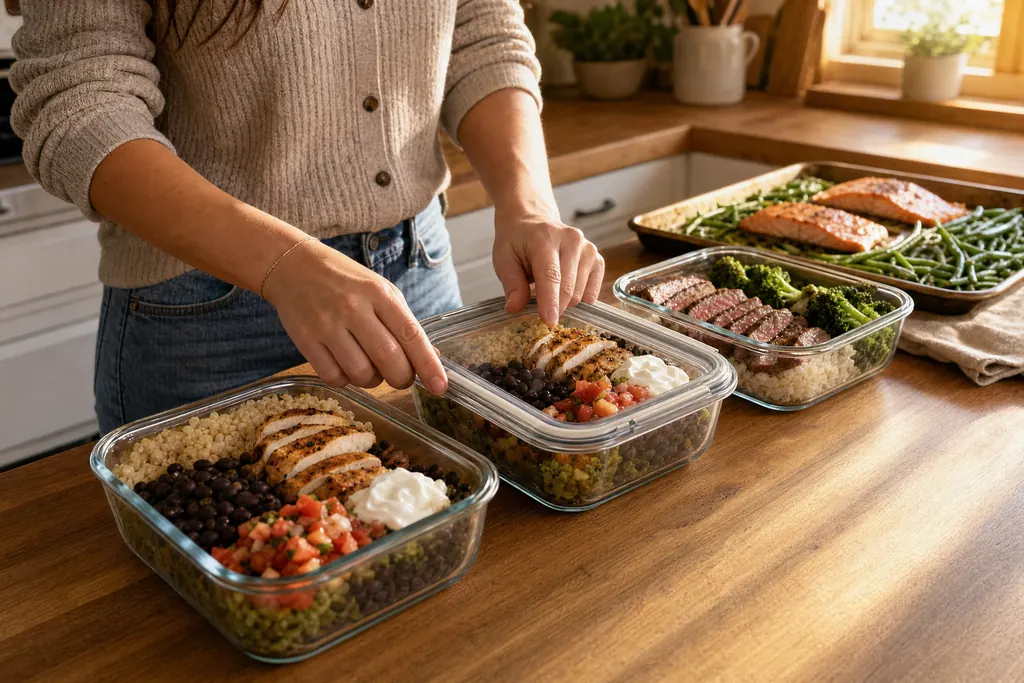
Cook once, eat all week. These six lunches are made in a batch and portioned into containers.
How long do they keep? The USDA says cooked leftovers keep 3 to 4 days in the fridge or 3 to 4 months in the freezer. So if you cook on Sunday, eat the fridge portions by Wednesday and freeze the rest.
When you reheat, make sure your lunch hits 165°F all the way through. If you don’t have a microwave at work, an insulated food jar keeps hot food hot. The USDA suggests filling it with boiling water first, emptying it, then adding the piping hot food.
Each recipe below is for one lunch. Multiply by four for a week’s worth.
9. Chicken burrito bowl
41 g protein, 415 calories
- 3 oz cooked chicken breast
- 1/2 cup black beans, rinsed
- 1/2 cup cooked brown rice
- 1/4 cup salsa
- 2 tbsp plain nonfat Greek yogurt, in place of sour cream
Season the chicken with chili powder and cumin and cook it until it reaches 165°F inside. Portion the rice, beans and chicken into containers, with the salsa and yogurt on the side.
Tip: Add the cold yogurt after you reheat the bowl.
10. Turkey and bean chili
40 g protein, 392 calories
- 4 oz 93% lean ground turkey (cooked weight)
- 1/2 cup kidney beans, rinsed
- 1/2 cup canned diced tomatoes
- 1/2 cup chopped bell pepper
- Chili powder, cumin and garlic
Brown the turkey with the pepper and spices until it reaches 165°F. Add the beans and tomatoes and simmer for 15 minutes.
Tip: Chili freezes well. Freeze single portions so you always have a lunch ready.
11. Greek turkey meatball bowl with quinoa
39 g protein, 391 calories
- 4 oz 93% lean ground turkey (cooked weight), mixed with garlic, oregano and lemon zest
- 1/2 cup cooked quinoa
- 1/2 cup diced cucumber
- 1/2 cup cherry tomatoes
- 2 tbsp plain nonfat Greek yogurt, mixed with grated cucumber and dill for a quick tzatziki, or Greek yogurt sauce
Roll the turkey into small meatballs and bake at 400°F for about 15 to 20 minutes, until they reach 165°F. Serve over the quinoa with the vegetables and tzatziki.
Tip: Keep the tzatziki in its own small container so the meatballs can be reheated on their own.
12. Beef and broccoli rice bowl
40 g protein, 370 calories
- 4 oz cooked top sirloin steak, sliced
- 1 cup broccoli florets
- 1/2 cup cooked white rice
- 1 tbsp low-sodium soy sauce, plus garlic and ginger
Cook the steak to at least 145°F and let it rest for 3 minutes before slicing, as the USDA recommends. Steam the broccoli, toss everything with the soy sauce, garlic and ginger, and portion it out.
Tip: Brown rice works too. The protein barely changes.
13. Sheet pan salmon, sweet potato and green beans
36 g protein, 426 calories
- 5 oz salmon (cooked weight)
- 1/2 cup cubed sweet potato
- 1 cup green beans
- Salt, pepper, garlic powder and a spritz of oil
Roast the sweet potato at 400°F for about 15 minutes. Add the green beans and salmon to the pan and roast for another 12 to 15 minutes, until the salmon flakes easily with a fork.
Tip: Salmon is also good cold the next day, flaked over the beans.
14. Shrimp and edamame soba stir-fry
39 g protein, 302 calories
- 4 oz cooked shrimp
- 1/2 cup shelled edamame
- 1/2 cup cooked soba noodles, or Japanese buckwheat noodles
- 1 tsp oil, plus low-sodium soy sauce, ginger and green onions
Stir-fry the edamame in the oil for a few minutes, add the shrimp, noodles and sauce, and toss until hot.
Tip: Frozen cooked shrimp is a big time saver. Thaw it in the fridge overnight.
Five minutes, nothing to cook
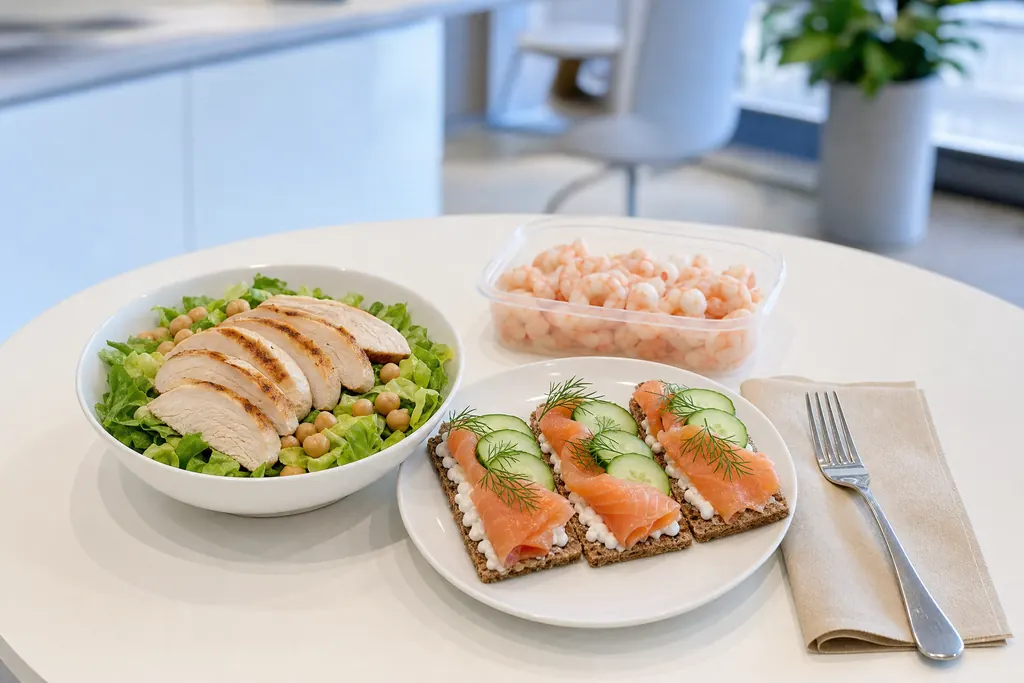
No time to prep? These five lunches come together from grocery store shortcuts.
15. Rotisserie chicken salad bowl
40 g protein, 270 calories
- 4 oz rotisserie chicken breast, skin removed
- 2 cups romaine, or the greens from a bagged salad kit
- 1/4 cup chickpeas, rinsed
Pile the chicken and chickpeas on the greens. If you’re using a salad kit, add half the dressing packet and taste before adding more.
Tip: We counted the chicken as plain roasted breast. The rotisserie seasoning isn’t included, so your numbers may be slightly different.
16. Greek yogurt chicken salad pita
39 g protein, 377 calories
- 3 oz cooked chicken breast, chopped
- 1/4 cup plain nonfat Greek yogurt
- 10 grapes, halved, plus diced celery
- 1 large whole-wheat pita
Stir the chicken, yogurt, grapes and celery together and stuff it into the pita.
Tip: Leftover rotisserie chicken is perfect here.
17. Smoked salmon and cottage cheese crispbreads
36 g protein, 342 calories
- 4 oz smoked salmon
- 1/2 cup 2% cottage cheese
- 3 rye crispbreads
- 1/2 cup sliced cucumber, plus fresh dill
Spread the cottage cheese on the crispbreads, then top with the salmon, cucumber and dill.
Tip: Watching your salt? Check the label on your smoked salmon and choose a lower sodium version if you can.
18. Roast beef and cheddar lettuce wraps
37 g protein, 300 calories
- 5 oz deli roast beef
- 1 oz cheddar cheese
- 2 tbsp plain nonfat Greek yogurt with 1 tsp horseradish
- 4 romaine leaves
Spread the horseradish yogurt on the lettuce, then roll the roast beef and cheese inside.
Tip: If you can find butter lettuce, its soft leaves are easier to roll than romaine.
19. Shrimp cocktail plate
37 g protein, 268 calories
- 5 oz cooked, peeled shrimp
- 1/2 cup sliced cucumber
- 6 whole-wheat crackers
- Cocktail sauce for dipping
Pack the shrimp cold with the cucumber and crackers, and the cocktail sauce on the side.
Tip: Look for shrimp that’s already cooked and peeled at the seafood counter or in the freezer aisle.
Vegetarian high protein lunches
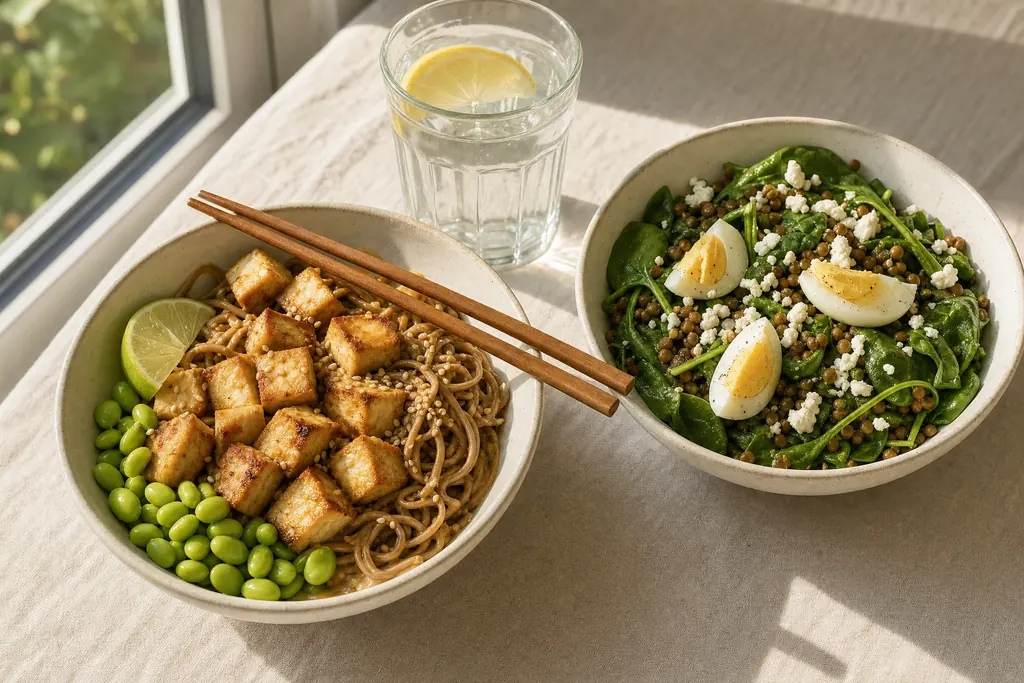
Hitting 30 grams without meat takes a little more planning, but it’s very doable. Four of these use eggs or dairy. The tofu bowl and the tempeh sandwich are fully plant based.
20. Peanut tofu and edamame noodle bowl
36 g protein, 412 calories
- 7 oz extra-firm tofu, cubed
- 1/2 cup shelled edamame
- 1/2 cup cooked soba noodles
- Sauce: 1 tbsp peanut butter, 1 tbsp low-sodium soy sauce, lime juice and a splash of warm water
Bake or pan-fry the tofu until golden. Whisk the sauce together and toss it with the tofu, edamame and noodles.
Tip: Tofu protein varies by brand. The USDA figure for extra-firm tofu is about 10 grams of protein per 100 grams, a bit over 3 oz. If your label shows more, you can use less tofu.
21. Lentil, egg and feta salad
33 g protein, 429 calories
- 1 cup cooked lentils
- 2 hard-boiled eggs, quartered
- 1/2 oz feta, crumbled
- 1 cup baby spinach
- Lemon juice and a drizzle of olive oil
Toss the lentils and spinach with lemon and oil, then top with the eggs and feta.
Tip: Precooked lentils, sold in vacuum packs, make this a five minute lunch.
22. Tempeh BLT-style sandwich
33 g protein, 429 calories
- 4 oz tempeh, or fermented soybean cake, thinly sliced
- 2 slices whole-wheat bread
- 1 tbsp hummus
- Lettuce and tomato slices
- Smoked paprika and a splash of soy sauce
Pan-fry the tempeh slices with the paprika and soy sauce until crisp at the edges. Build the sandwich with hummus, lettuce, tomato and tempeh.
Tip: The smoky, salty tempeh slices are the “bacon” here.
23. Chickpea salad pita with Greek yogurt
33 g protein, 515 calories
- 1 cup chickpeas, rinsed and roughly mashed
- 1/2 cup plain nonfat Greek yogurt
- 1/2 cup diced cucumber, plus lemon juice and dill
- 1 large whole-wheat pita
Mash the chickpeas with the yogurt, cucumber, lemon and dill, then stuff it into the pita.
Tip: This is the most filling lunch on the list, and the highest in calories. For a lighter version, skip the pita and eat it with crispbreads.
24. Black bean and egg bowl
32 g protein, 379 calories
- 2 eggs plus 2 egg whites, scrambled
- 1/2 cup black beans, rinsed
- 1/2 oz cheddar cheese, shredded
- 1/4 cup salsa
Scramble the eggs and whites, then serve over the warm beans with the cheese and salsa.
Tip: Make it ahead and reheat to 165°F, or pack the beans cold with hard-boiled eggs instead.
25. Edamame quinoa power salad
31 g protein, 465 calories
- 1 cup shelled edamame
- 1/2 cup cooked quinoa
- 1 oz feta, crumbled
- 2 tbsp roasted pumpkin seeds
- Lemon vinaigrette
Toss everything together. It keeps well for a few days in the fridge.
Tip: Pumpkin seeds, or pepitas, add crunch and a few extra grams of protein.
How much protein do you need in a day?
Here’s the short answer: probably more than the official minimum.
The recommended dietary allowance, or RDA, is 0.8 grams of protein per kilogram of body weight. Researchers describe it as the amount that’s adequate to avoid obvious inadequacies, not the amount that’s best for everyone.
So what’s a better target? A review of the protein research suggests at least 1.2 to 1.6 grams per kilogram a day for adults. That’s about 0.55 to 0.73 grams per pound.
Here’s what that looks like for a 160 pound woman:
- Daily target: about 87 to 116 grams of protein
- Per meal, over three meals: about 29 to 39 grams
That’s where our 30 gram lunch comes from.
What about people who work out? The International Society of Sports Nutrition recommends 20 to 40 grams of protein per meal for people who exercise, and 1.4 to 2.0 grams per kilogram a day. A separate review of muscle building research landed on about 0.4 grams per kilogram per meal, which is also about 29 grams for a 160 pound woman. Both are based on people who exercise, so think of them as a guide if you’re lifting weights.
Does it matter how you spread your protein out? Less than you might think. In a 16 week study of 41 adults who were overweight, cutting calories and strength training three days a week, eating 30 grams at every meal or 10, 20 and 60 grams made no difference to their body composition. Your daily total matters most. A solid lunch is simply one of the easiest ways to reach it, especially if breakfast tends to be light.
Is that much protein safe? For healthy people, researchers have found no evidence linking higher protein diets to kidney disease or weaker bones. If you have kidney disease, follow your doctor’s advice on protein.
Want to see how lunch fits into a full day? Our 1500 calorie meal plan lays out every meal, and our female body toning meal plan is built around losing fat while keeping muscle. For an evening top up, try one of our bedtime snacks for weight loss.
Does a high protein lunch keep you full?
It may help, though it’s not magic.
One study is especially relevant if you’re a woman trying to lose weight. For 12 weeks, 46 women aged 28 to 80 all cut 750 calories a day. The women eating more protein, 30% of their calories versus 18%, lost about half as much lean mass: about 1.5 kg (3.3 lb) compared with 2.8 kg (6.2 lb). Lean mass, or the weight of everything in your body except fat, includes your muscle. The higher protein group also felt less of the drop in fullness that comes with cutting calories.
A bigger picture comes from a review of 24 studies with 1,063 adults. Compared with standard protein diets, higher protein weight loss diets took off about 2 pounds more fat and kept about 1 pound more lean mass over about 12 weeks. The researchers called the benefits modest, and that’s a fair word for it.
What about feeling full? A meta-analysis, or a study that pools the results of other studies, found that eating more protein did increase fullness. But the authors point out this was measured under tightly controlled lab conditions, so it may not translate perfectly to real life.
The takeaway? A high protein lunch is a helpful nudge, not a guarantee. Pair it with fiber from beans, vegetables and whole grains, and keep an eye on your total calories for the day.
If you’d like more lunch and dinner ideas built around calories, our weight loss meals under 500 calories are a good next stop. And for a make-ahead salad with a different flavor, try our Mediterranean chicken salad.
How we worked out the numbers
We calculated the protein and calories for every lunch using USDA FoodData Central, the government’s food nutrient database. Each ingredient was weighed out in grams using the USDA’s own portion sizes, like 50 grams for a large egg or 226 grams for a cup of cottage cheese.
A few things to keep in mind:
- Extras aren’t counted. Dressing, sauces, oil for cooking and seasoning add calories, so count them if you’re tracking.
- Brands vary. The USDA lists packaged sliced turkey breast at 14.8 grams of protein per 100 grams and low-salt deli turkey at 21.8 grams. Extra-firm tofu comes in at about 10 grams. Your label is the final word.
- Cooked weights matter. Where a recipe says “cooked weight”, weigh the meat after cooking, since that’s how we counted it.
Protein and calories for all 25 lunches
| Lunch | Protein | Calories |
|---|---|---|
| 1. Chicken Caesar wrap | 47 g | 378 |
| 2. Tuna and white bean salad | 36 g | 345 |
| 3. Cottage cheese power bowl | 33 g | 355 |
| 4. Turkey and hummus wrap | 32 g | 340 |
| 5. Salmon salad lettuce cups | 34 g | 295 |
| 6. Greek yogurt egg salad sandwich | 33 g | 429 |
| 7. Greek chicken and chickpea salad jar | 39 g | 410 |
| 8. Protein bento box | 35 g | 383 |
| 9. Chicken burrito bowl | 41 g | 415 |
| 10. Turkey and bean chili | 40 g | 392 |
| 11. Greek turkey meatball bowl | 39 g | 391 |
| 12. Beef and broccoli rice bowl | 40 g | 370 |
| 13. Sheet pan salmon | 36 g | 426 |
| 14. Shrimp and edamame soba stir-fry | 39 g | 302 |
| 15. Rotisserie chicken salad bowl | 40 g | 270 |
| 16. Greek yogurt chicken salad pita | 39 g | 377 |
| 17. Smoked salmon and cottage cheese crispbreads | 36 g | 342 |
| 18. Roast beef and cheddar lettuce wraps | 37 g | 300 |
| 19. Shrimp cocktail plate | 37 g | 268 |
| 20. Peanut tofu and edamame noodle bowl | 36 g | 412 |
| 21. Lentil, egg and feta salad | 33 g | 429 |
| 22. Tempeh BLT-style sandwich | 33 g | 429 |
| 23. Chickpea salad pita | 33 g | 515 |
| 24. Black bean and egg bowl | 32 g | 379 |
| 25. Edamame quinoa power salad | 31 g | 465 |
The bottom line
A high protein lunch doesn’t need to be complicated. Start with a palm-sized portion of chicken, fish, lean meat, eggs, tofu or tempeh, add beans, Greek yogurt or cottage cheese for a boost, and fill the rest with vegetables and whole grains.
Pick two or three favorites from this list and rotate them through your week. If you’d like more ideas, our 30 High Protein Recipes cookbook has breakfasts, dinners and snacks too, each with its calories and macros.
Happy lunching, and tell us in the comments which one becomes your new go-to!
