

This post may contain affiliate links at no additional cost to you. As an Amazon Associate I earn from qualifying purchases. Click to view our full disclosure.
What's inside
This 30 day glute challenge is five butt-focused moves you do at home, five days a week, for about 20 to 25 minutes. It gets harder every 10 days, so your glutes keep having a reason to change.
No equipment needed. A mini resistance band makes it harder later on, but it is optional. And if squats usually burn your thighs instead of your butt, each move comes with tips for that.
The challenge at a glance
| Length | 30 days, in three 10 day phases |
| Workout days | 5 a week (rest days 6, 7, 13, 14, 20, 21, 27, 28) |
| Session length | About 20 minutes in phases 1 and 2, about 25 in phase 3 (35 with a 4th round) |
| Equipment | None. Optional mini band from phase 2 |
| Level | Beginner to intermediate |
The 5 glute moves
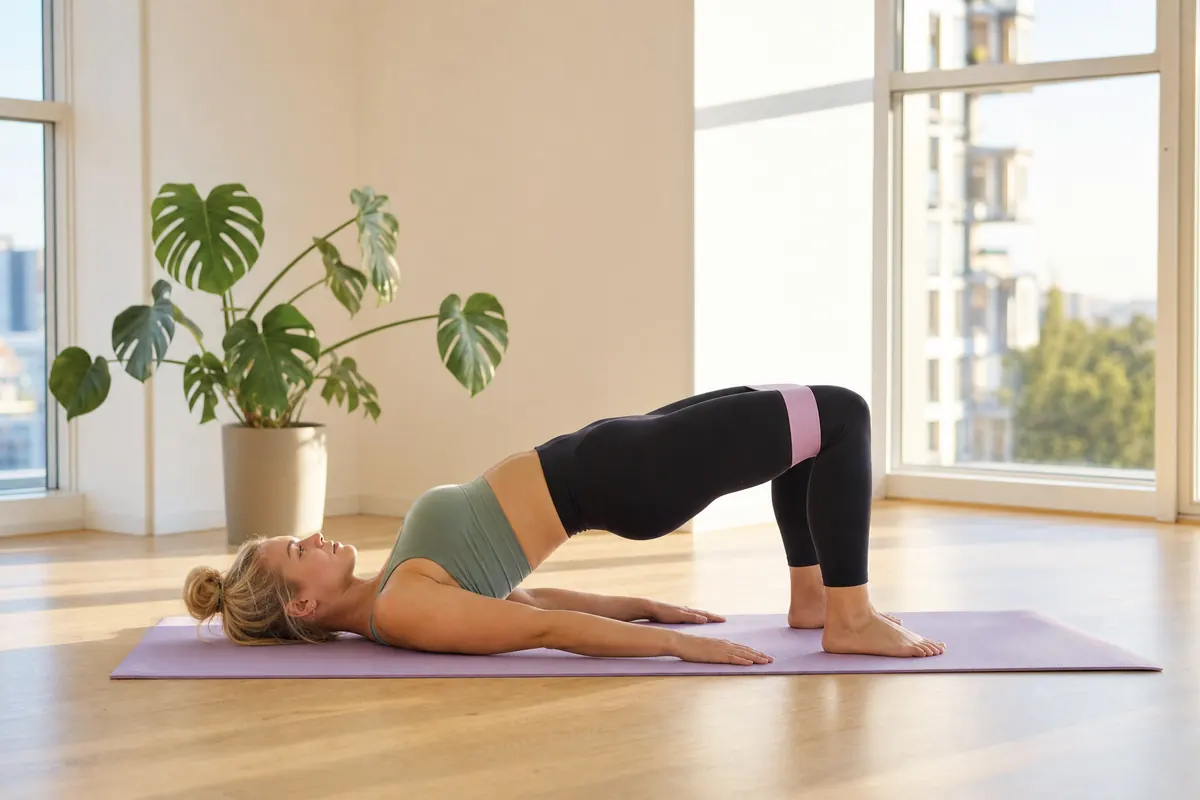
| # | Move | What it works | Feel it in your glutes |
|---|---|---|---|
| 1 | Glute bridge | Glute max (the big one) | Push through your heels, not your toes. At the top, squeeze like you are holding a coin between your cheeks. If your hamstrings cramp, move your feet closer to your butt |
| 2 | Sumo squat | Glutes, inner thighs | Feet wide, toes turned out. Sit straight down and push your knees out. Drive up through your heels and squeeze at the top |
| 3 | Reverse lunge | Glutes, legs | Lean your chest slightly forward over the front leg. Push the floor away through the front heel. If you feel it mostly in your thighs, try a slightly longer step |
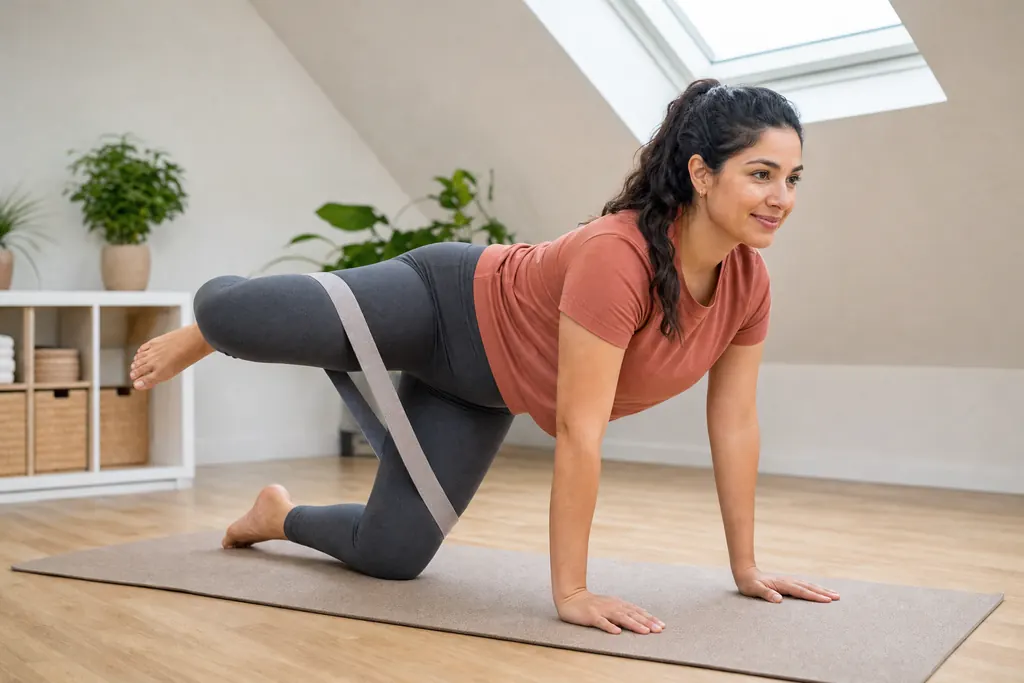
| 4 | Fire hydrant | Glute med (the side of your butt) | On hands and knees, lift one bent knee out to the side without leaning your body. Small and controlled beats big and floppy |
| 5 | Frog pump | Glute max, finisher | Lie on your back, soles of your feet together, knees out. Lift your hips with short, fast squeezes |
Why these five. Two of your glutes’ main jobs are pushing your hips forward (bridges, squats, lunges) and moving your leg out to the side (fire hydrants). That is why this plan trains both, not just more squats.
The 30 day plan
Do the five moves in order. Rest 30 seconds between moves and 90 seconds between rounds.
Phase 1: days 1 to 10 (learn the moves)
| Move | Reps | Rounds |
|---|---|---|
| Glute bridge | 15 | 3 |
| Sumo squat | 12 | 3 |
| Reverse lunge | 8 per leg | 3 |
| Fire hydrant | 10 per leg | 3 |
| Frog pump | 20 | 3 |
Phase 2: days 11 to 20 (slower and harder)
| Move | Change | Reps | Rounds |
|---|---|---|---|
| Glute bridge | 3 second hold at the top | 12 | 3 |
| Sumo squat | 3 seconds down | 12 | 3 |
| Reverse lunge | Pause 1 second at the bottom | 10 per leg | 3 |
| Fire hydrant | Add a mini band above knees (optional) | 12 per leg | 3 |
| Frog pump | 25 | 3 |
Phase 3: days 21 to 30 (single leg)
| Move | Change | Reps | Rounds |
|---|---|---|---|
| Glute bridge | Single leg | 10 per leg | 3 to 4 |
| Sumo squat | Pulse at the bottom: down, up halfway, down, then stand | 10 | 3 to 4 |
| Reverse lunge | 3 seconds down | 10 per leg | 3 to 4 |
| Fire hydrant | Band, 2 second hold at the top | 12 per leg | 3 to 4 |
| Frog pump | Band around knees | 30 | 3 to 4 |
Calendar: workouts on days 1 to 5, rest days 6 and 7, and so on. Days 29 and 30 are workout days so you finish strong.
The rule that makes it work
Each phase has to feel harder than the last. If the last few reps of a set feel easy, slow the move down, add a pause, or add the band.
Here is why. In a review of 21 studies, muscle grew about as much with light loads as with heavy ones when every set was taken to failure (until another rep was impossible). Those studies used weights, not bodyweight moves, so this is our coaching rule: bodyweight and bands can do the job when the last reps are truly hard.
What can you expect in 30 days?
Strength, first. Watch your reps, not the mirror. If bridges and lunges get easier, and stairs and getting up from chairs feel lighter, you are getting stronger.
Shape, slowly. Glutes are muscles, and when researchers pooled 29 studies of adults aged 18 to 45, women’s muscles grew by a similar percentage to men’s on the same training. But plan on months, not weeks, for a change you can see. Thirty days builds the foundation and the habit. Keep training your glutes at least twice a week after the challenge (the WHO recommends muscle-strengthening work for all major muscle groups on two or more days a week) to give the shape time to come.
Eat enough to build. Muscle needs protein. The International Society of Sports Nutrition says 1.4 to 2.0 g per kg of body weight a day is enough for most people who exercise. If you are eating very little to lose weight, expect slower growth: in a review of training studies, mostly in inactive middle-aged and older adults, people in a calorie deficit gained less lean mass (the non-fat part of the body) than people eating enough. Our flat stomach big booty meal plan has a muscle gain version with the meals laid out.
After day 30
- Add weight. Hold a dumbbell or kettlebell on your hips for bridges, at your chest for squats.
- Go deeper. Our heart shaped butt guide has a full glute workout plan, and underbutt exercises covers the lower glutes.
- Try a full body challenge. The 30 day arms, abs and butt challenge keeps your glutes working while training everything else.
Questions
I feel squats in my knees.
Sit back further, keep your weight in your heels, and do not go lower than is comfortable. If narrow squats bother your knees, see whether the wider sumo stance feels better.
Can I do this every day?
Use the rest days. They are part of the plan and give your glutes time to recover.
What band should I buy?
A pack of fabric mini bands in light, medium and heavy is inexpensive and a good place to start.
Can I combine this with running or walking?
Yes. Cardio on rest days, or after the glute workout, is fine.
This article is for general information and is not medical advice. If you are pregnant, have hip, knee or back pain, or a medical condition, check with a doctor before starting.
