

Hungry at night but worried a snack will ruin your progress? Good news: a small, smart bedtime snack can fit into weight loss just fine.
The key word is small. A 150 calorie snack is a very different thing from a second dinner on the couch.
In this article, we’re covering what the research says about eating before bed, how to pick a good bedtime snack, and 12 easy options, each under 200 calories, with portions and protein.
Save this list to your Pinterest board for later
Is it bad to eat before bed?
Not if it’s a small snack. Here’s what the research shows.
Big meals late at night are the problem, not small snacks. A review of the research on nighttime eating found that large late meals were linked to poorer health, but small snacks of about 150 calories don’t appear to be harmful, and may even help with muscle and heart health.
A planned snack can even help you eat less overall. In one study, people who tended to snack at night were given a small bowl of cereal with low fat milk 90 minutes after dinner. Those who stuck with it ate about 400 fewer calories a day over 4 weeks, including less after dinner.
What about moving whole meals later? That’s a different story. In a tightly controlled study of adults with overweight, eating the same meals later in the day made people hungrier and lowered the calories they burned. So keep dinner at a normal time, and keep the bedtime snack small.
How to pick a good bedtime snack
Look for a snack that ticks these boxes:
- About 100 to 200 calories, and count it in your day’s total
- Some protein or fiber, so it actually keeps you satisfied
- Little added sugar
- No caffeine
If you follow intermittent fasting, have your snack before your eating window closes. Our 7 day intermittent fasting meal plan builds a snack into every day.
12 best bedtime snacks for weight loss
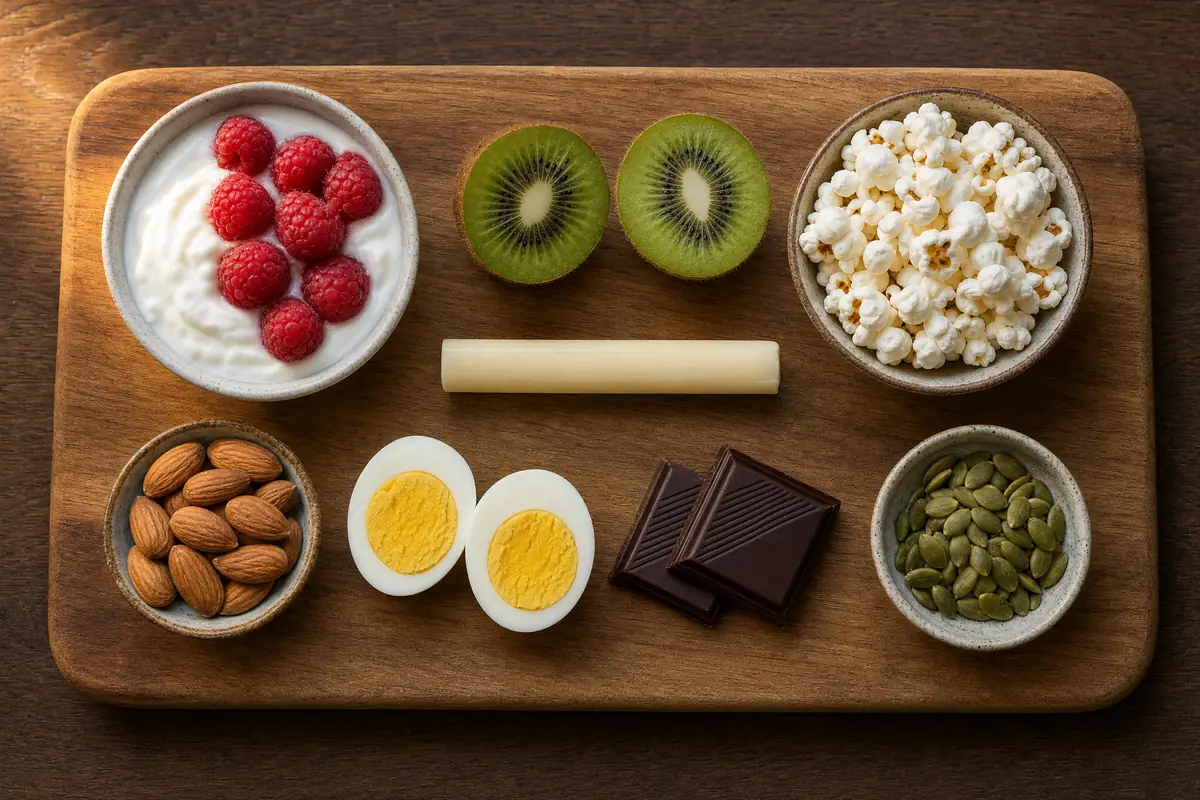
All values are approximate, from USDA FoodData Central. Check your labels, since brands vary.
1. A handful of almonds
Nuts are mostly healthy unsaturated fats, plus some protein and fiber, which makes them filling. A 1 oz handful of almonds, about 23 nuts, has around 160 calories, 6 g of protein and 3.5 g of fiber.
Nuts are easy to overeat, so count out your portion rather than eating from the bag.
2. Greek yogurt with berries
Plain nonfat Greek yogurt is one of the best protein snacks around. A single serve cup (5.3 oz) with half a cup of raspberries has about 120 calories and 16 g of protein.
Choose plain and add your own fruit. Flavored yogurts often have a lot of added sugar.
3. Kiwi or tart cherries
If you have a sweet tooth, fruit is a great pick. It’s low in calories and high in water and fiber.
Two kiwis come to about 80 calories. In a small study of adults with sleep problems, eating 2 kiwis an hour before bed for 4 weeks helped people fall asleep faster and sleep longer.
A cup of tart cherries is about 80 calories too. In another small study, drinking tart cherry juice for a week raised melatonin, the hormone that helps you sleep, and increased total sleep time. Both studies were small, but either fruit makes a light, sweet snack.
Dried fruit is fine in small amounts, but it’s much easier to overeat. Stick to a small handful.
4. A protein shake
A protein shake takes a minute to make. One scoop (30 g) of whey protein in water has about 110 calories and 23 g of protein.
If you lift weights, a protein snack before bed may help. In a 12 week study, young men who had about 27 g of protein every night before sleep gained more strength and muscle than men who had a placebo.
5. Whole grain crackers and cheese
Crackers and cheese give you a mix of carbs, protein and fat. Six whole wheat crackers with a slice of reduced fat cheddar have about 190 calories and 9 g of protein.
Look for crackers with whole grain as the first ingredient.
6. Avocado
Avocado is rich in healthy fats and fiber, which makes it satisfying. A third of an avocado has about 110 calories and 4.5 g of fiber. Add a pinch of salt and pepper, or mash it onto a couple of whole grain crackers.
7. Dark chocolate
Yes, chocolate can make the list. Half an ounce of dark chocolate (70 to 85% cocoa) has about 80 calories, and its rich, bitter taste makes a small piece feel like enough.
One thing to know: dark chocolate contains some caffeine, about 11 mg in half an ounce. That’s around a tenth of a cup of brewed coffee (about 95 mg). If you’re sensitive to caffeine, have it earlier in the evening.
8. A small bowl of oatmeal
Oatmeal isn’t just for breakfast. A quarter cup of oats cooked in half a cup of 2% milk has about 140 calories and 7 g of protein, plus some fiber to keep you full.
Flavor it with cinnamon, nutmeg or a few berries instead of sugar.
9. String cheese
String cheese is portion controlled and easy to grab. One part skim mozzarella stick (1 oz) has about 80 calories and 7 g of protein, plus calcium.
10. Air popped popcorn
Popcorn is a whole grain, and plain air popped popcorn is only about 30 calories a cup. Three cups come to about 90 calories with 3.5 g of fiber, so it’s a big, crunchy bowl for very few calories.
Skip the butter and sugar, or use a light spray of oil and a pinch of salt.
11. Hard-boiled eggs
Eggs are an easy protein hit. One hard-boiled egg has about 80 calories and 6 g of protein, so two eggs come to about 160 calories and 13 g of protein.
Boiling means no extra oil. Make a batch at the start of the week so they’re ready when you want them.
12. Pumpkin seeds
Pumpkin seeds are one of the richest food sources of magnesium, a mineral your body uses for muscle and nerve function. One ounce of roasted pumpkin seeds has about 156 mg of magnesium, 37% of the Daily Value, plus about 160 calories and 8 g of protein.
Like nuts, they’re calorie dense, so measure out an ounce.
From our shopOur 30 High Protein Recipes cookbook has breakfasts, lunches, dinners and snacks, with the calories, protein, carbs and fat on every recipe.
What to skip before bed
These aren’t banned, but they make it harder to stick to your plan or get a good night’s sleep:
- Caffeine: coffee, black or green tea, energy drinks and pre-workout. In one study, a moderate dose of caffeine taken even 6 hours before bed disrupted sleep.
- Big portions straight from the bag or tub: chips, ice cream and cookies are easy to overeat.
- A second dinner: if you’re truly hungry, have one of the snacks above rather than a full plate.
Questions people ask
Will eating at night make me gain weight?
Not by itself. What matters most is how much you eat over the whole day. A small snack that fits your calories won’t undo your progress. Large late meals are where the trouble starts.
What time should I stop eating before bed?
There’s no exact rule. Many people like to have their snack an hour or two before bed. If you get heartburn at night, keep the snack small and have it earlier.
Is fruit too much sugar at night?
No. Whole fruit comes with fiber and water, and a couple of kiwis or a cup of berries is a light snack.
Can I have a bedtime snack if I’m doing intermittent fasting?
Yes, as long as you eat it before your eating window closes.
I have diabetes. Should I have a bedtime snack?
Ask your doctor or diabetes educator. Whether you need one, and what kind, depends on your medication and your blood sugar.
What if I’m still hungry after my snack?
Have a glass of water or a cup of herbal tea, and give it 15 minutes. If hunger at night is a regular thing, you may need more protein or fiber earlier in the day. Our natural appetite suppressant hacks can help.
Sweet dreams, and enjoy your snack!
